精读《傲慢与偏见》14:简为什么这么容易喜欢宾利?
第四章,简与伊丽莎白私下谈起宾利先生:一个看见优点,一个看见盲点。读懂 gallantry, censure, affectation, ostentation, candour。

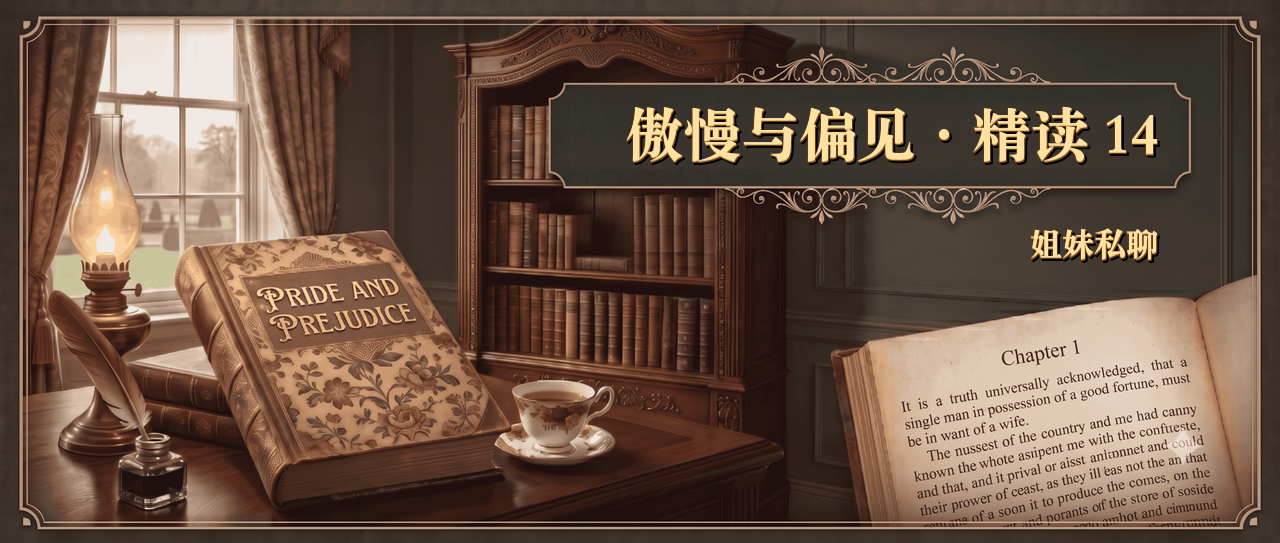
简与伊丽莎白私下谈起宾利先生:一个看见优点,一个看见盲点。
这一段来自《傲慢与偏见》第四章。它的重点不只是推进情节,而是让我们看到人物怎样通过语言、判断和社交反应暴露自己。
English Text: Jane and Elizabeth Discuss Mr. Bingley
When Jane and Elizabeth were alone, the former, who had been cautious in her praise of Mr. Bingley before, expressed to her sister how very much she admired him.
“He is just what a young-man ought to be,” said she, “sensible, good-humoured, lively; and I never saw such happy manners! so much ease, with such perfect good breeding!”
“He is also handsome,” replied Elizabeth, “which a young man ought likewise to be if he possibly can. His character is thereby complete.”
“I was very much flattered by his asking me to dance a second time. I did not expect such a compliment.”
“Did not you? I did for you. But that is one great difference between us. Compliments always take you by surprise, and me never. What could be more natural than his asking you again? He could not help seeing that you were about five times as pretty as every other woman in the room. No thanks to his gallantry for that. Well, he certainly is very agreeable, and I give you leave to like him. You have liked many a stupider person.”
“Dear Lizzy!”
“Oh, you are a great deal too apt, you know, to like people in general. You never see a fault in anybody. All the world are good and agreeable in your eyes. I never heard you speak ill of a human being in my life.”
“I would wish not to be hasty in censuring anyone; but I always speak what I think.”
“I know you do: and it is that which makes the wonder. With your good sense, to be so honestly blind to the follies and nonsense of others! Affectation of candour is common enough; one meets with it everywhere. But to be candid without ostentation or design,--to take the good of everybody’s character and make it still better, and say nothing of the bad,--belongs to you alone. And so, you like this man’s sisters, too, do you? Their manners are not equal to his.”
“Certainly not, at first; but they are very pleasing women when you converse with them. Miss Bingley is to live with her brother, and keep his house; and I am much mistaken if we shall not find a very charming neighbour in her.”
中文翻译:简和伊丽莎白聊宾利
当简和伊丽莎白独处时,之前对宾利先生的赞美还有所保留的简,向妹妹表达了她对他由衷的钦佩。
“他正是年轻人该有的样子,”她说,“明理、风趣、活泼;我从未见过如此讨喜的举止!那么从容不迫,又有极好的教养!”
“他还很英俊,”伊丽莎白回答道,“这也是年轻人力所能及的本分。这样一来,他的人品就完美无缺了。”
“他请我跳第二支舞,让我受宠若惊。我没想到会有这样的赞赏。”
“你没想到吗?我倒替你料到了。但这正是咱们的一大区别。恭维话总是让你感到意外,我却从不如此。他再次邀请你,有什么比这更自然的呢?他又不是瞎子,看不出你比屋里其他女人漂亮五倍。这可算不上是他献殷勤。好吧,他确实很讨人喜欢,我准许你喜欢他。你以前喜欢过许多比他愚蠢得多的人。”
“亲爱的丽萃!”
“噢,你知道,你太容易喜欢上所有人了。你从不挑剔别人的毛病。在你眼里,世人都是善良可亲的。我这辈子从没听你说过任何人的坏话。”
“我不愿草率地指责任何人;但我说的都是心里话。”
“我知道你是真心的,这正是令人惊奇之处。凭你的见识,竟能如此真诚地对别人的愚蠢和荒唐视而不见!装出来的坦率随处可见;但要做到坦率而不矫揉造作,不存心机——只看人好的一面并加以发扬,对坏的一面只字不提——这就唯独是你了。这么说,你也喜欢那个人的姐妹咯?她们的举止可比不上他。”
“起初确实不如,但交谈之后会发现她们是非常令人愉快的女性。宾利小姐将和她哥哥同住,替他料理家务;如果我没弄错的话,我们会发现她是个非常迷人的邻居。”
阅读提示:简的善意,和伊丽莎白的敏锐
这一段表面是在写简夸宾利,实际是在写两姐妹看人的方式完全不同。简看到的是一个年轻人该有的优点;伊丽莎白则马上带着一点俏皮补上一句:他还很英俊,这样人品就完整了。
简对 compliments 很容易感到意外,因为她不太假设别人会欣赏自己;伊丽莎白却替她早就料到了。两人的差别不只是自信程度,更是看人方式。
最关键的是 Elizabeth 对 Jane 的评价:to be candid without ostentation or design。简的坦率不是装出来的,也不是为了显得高尚。奥斯汀用姐妹对话,把简的善良和伊丽莎白的判断力同时写出来。
重点词汇
gallantry /ˈɡæləntri/ noun — 殷勤;对女性的彬彬有礼
原文例句:He was famous for his gallantry towards the ladies.
censure /ˈsenʃər/ verb — 严厉斥责;指责
原文例句:I would wish not to be hasty in censuring anyone.
affectation /ˌæfekˈteɪʃn/ noun — 做作;矫揉造作
原文例句:Her affectation of superior knowledge annoyed everyone.
ostentation /ˌɒstenˈteɪʃn/ noun — 卖弄;夸示;排场
原文例句:She dressed with great ostentation but little taste.
candour /ˈkændər/ noun — 坦率;直率(美式拼写为candor)
原文例句:She spoke with great candour about her life.
长难句解析
1. But to be candid without ostentation or design,--to take the good of everybody’s character and make it still better, and say nothing of the bad,--belongs to you alone.
📌 这是一个主语非常长的句子。句子使用了三个不定式短语作为并列主语,谓语动词是 belongs。
🔍 结构:[To be candid...] (不定式1) + [to take...] (不定式2) + [and say nothing...] (不定式3) + belongs (谓语) + to you alone (状语).
2. I was very much flattered by his asking me to dance a second time.
📌 这句话中使用了动名词短语 'his asking me...' 作为介词 'by' 的宾语。'his' 是动名词的逻辑主语。
🔍 结构:I (主语) + was flattered (被动语态谓语) + by (介词) + [his (逻辑主语) + asking (动名词) + me to dance...] (介词宾语).
今日测验
Q1. What difference between herself and Jane does Elizabeth point out?
A. Jane is prettier than Elizabeth.
B. Elizabeth likes Mr. Bingley more than Jane does.
C. Jane is surprised by compliments, while Elizabeth expects them.
D. Elizabeth is better at dancing than Jane.
Q2. How does Elizabeth describe Jane's attitude towards other people's faults?
A. Jane is critical and harsh.
B. Jane is honestly blind to the follies of others.
C. Jane pretends not to see them to be polite.
D. Jane enjoys gossiping about them.
想看答案和解析?
这篇的自测编号是 Y7VMP。
微信扫码关注公众号 【喜乐成长路】,回复:
Y7VMP:查看本篇完整答案解析Y7VMP 1:B:提交第 1 题答案(1=第 1 题,B=你的选项;示例不是答案)Y7VMP 1:B 2:A或Y7VMP BA:一次提交两题(按题号顺序;示例不是答案)

扫不了码的话,可以在微信里搜索 「喜乐成长路」,或搜索微信号 xilechengzhanglu。
我会继续把《傲慢与偏见》拆成一小段一小段来读:原文、翻译、词汇、长难句和自测都会发在公众号里。适合想读英文原著,但又不想被长句和生词劝退的读者。