精读《傲慢与偏见》21:pride 和 vanity 到底差在哪?
第五章,众人继续讨论达西的傲慢,玛丽给出 pride 与 vanity 的区分,伊丽莎白则一句话点破自尊受伤。

第五章,众人继续讨论达西的傲慢,玛丽给出 pride 与 vanity 的区分,伊丽莎白则一句话点破自尊受伤。
这一段来自《傲慢与偏见》第五章。它不只是补充背景,而是在舞会之后打开小镇社交圈,让人物通过评价别人暴露自己。
English Text: Discussions on Mr. Darcy's Pride
“I do not mind his not talking to Mrs. Long,” said Miss Lucas, “but I wish he had danced with Eliza.”
“Another time, Lizzy,” said her mother, “I would not dance with him, if I were you.”
“I believe, ma’am, I may safely promise you never to dance with him.”
“His pride,” said Miss Lucas, “does not offend me so much as pride often does, because there is an excuse for it. One cannot wonder that so very fine a young man, with family, fortune, everything in his favour, should think highly of himself. If I may so express it, he has a right to be proud.”
“That is very true,” replied Elizabeth, “and I could easily forgive his pride, if he had not mortified mine.”
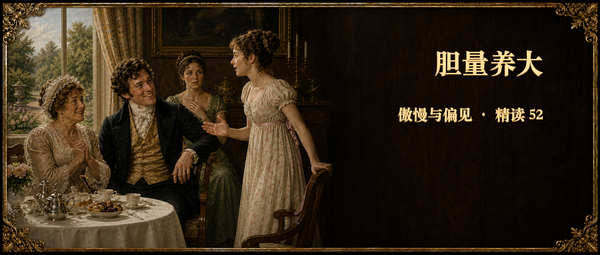
“Pride,” observed Mary, who piqued herself upon the solidity of her reflections, “is a very common failing, I believe. By all that I have ever read, I am convinced that it is very common indeed; that human nature is particularly prone to it, and that there are very few of us who do not cherish a feeling of self-complacency on the score of some quality or other, real or imaginary. Vanity and pride are different things, though the words are often used synonymously. A person may be proud without being vain. Pride relates more to our opinion of ourselves; vanity to what we would have others think of us.”
“If I were as rich as Mr. Darcy,” cried a young Lucas, who came with his sisters, “I should not care how proud I was. I would keep a pack of foxhounds, and drink a bottle of wine every day.”
“Then you would drink a great deal more than you ought,” said Mrs. Bennet; “and if I were to see you at it, I should take away your bottle directly.”
The boy protested that she should not; she continued to declare that she would; and the argument ended only with the visit.
中文翻译:关于达西先生傲慢的讨论
“我不介意他不理睬朗太太,”卢卡斯小姐说,“但我真希望他当时邀伊丽莎跳了舞。”
“下次,丽萃,”她母亲说,“如果我是你,我就不跟他跳。”
“我想,妈妈,我可以向您保证,我永远不会跟他跳舞。”
“他的傲慢,”卢卡斯小姐说,“并不像一般人的傲慢那样让我反感,因为这是有情可原的。像这样一个优秀的年轻人,家世显赫,家财万贯,凡事顺遂,难免会自视甚高。如果可以这样说的话,他有骄傲的权利。”
“这话很对,”伊丽莎白回答,“如果他没有伤害我的自尊心,我原本可以轻易原谅他的傲慢。”
“傲慢,”玛丽说道——她一向自诩见解深刻,“我相信是一种非常普遍的毛病。根据我读过的所有书,我确信这确实非常普遍;人性特别容易由此犯错,而且我们之中很少有人不因为某种真实或想象出来的品质,而怀有一种沾沾自喜的感觉。虚荣和傲慢是两码事,尽管这两个词常被混用。一个人可以傲慢但不虚荣。傲慢更多关乎我们对自己的看法,而虚荣则关乎我们需要别人怎么看我们。”
“如果我有达西先生那么有钱,”跟姐姐们一起来的小卢卡斯叫道,“我就不在乎自己有多傲慢了。我要养一群猎狐犬,每天喝一瓶酒。”
“那你喝得就太多了,”贝内特太太说,“如果让我看见你那样喝,我会立刻把你的酒瓶拿走。”
那个男孩抗议说她不能那样做;她继续宣称她一定会那样做;这场争论直到拜访结束才告一段落。
阅读提示:pride 是我们怎么看自己,vanity 是我们希望别人怎么看自己。
玛丽的定义很认真,但奥斯汀真正好笑的地方,是每个人都在用自己的方式谈傲慢。
这一段的读法,是把“闲谈”当作人物描写来看。奥斯汀不是随便写邻居聊天,而是在展示小镇社交如何制造判断、传闻和婚姻期待。
如果只看情节,这些句子似乎只是补充说明;但如果看语气,就会发现每个人都在用自己的方式解释世界。
重点词汇
mortify /ˈmɔːrtɪfaɪ/ verb — 使受辱,伤害(自尊心)
原文例句:I could easily forgive his pride, if he had not mortified mine.
pique /piːk/ verb — 夸耀,自诩 (pique oneself on)
原文例句:Mary piqued herself upon the solidity of her reflections.
self-complacency /ˌself kəmˈpleɪsnsi/ noun — 自满,沾沾自喜
原文例句:Few of us do not cherish a feeling of self-complacency on the score of some quality.
synonymously /sɪˈnɒnɪməsli/ adverb — 同义地,作为同义词
原文例句:Vanity and pride are different things, though the words are often used synonymously.
长难句解析
1. One cannot wonder that so very fine a young man, with family, fortune, everything in his favour, should think highly of himself.
说明:这是一个包含宾语从句的复合句。主句是'One cannot wonder'(人们不足为奇)。'that'引导宾语从句,说明不足为奇的内容。从句的主语是'so very fine a young man',中间插入了介词短语'with family, fortune, everything in his favour'作为定语修饰young man,谓语是'should think highly of himself'。
结构:主语(One) + 谓语(cannot wonder) + 宾语从句(that...)
2. I could easily forgive his pride, if he had not mortified mine.
说明:这是一个混合虚拟语气的句子。主句'I could easily forgive his pride'表示对现在的假设(本来可以原谅),从句'if he had not mortified mine'表示对过去事实的假设(如果他当时没有伤害我的话)。
结构:主句(I could...forgive...) + 条件状语从句(if he had not...)
今日测验
Q1. According to Mary, what is the main difference between pride and vanity?
A. Pride is a virtue, while vanity is a vice.
B. Pride relates to our opinion of ourselves, while vanity relates to what others think of us.
C. Rich people are proud, while poor people are vain.
D. There is no difference; they are used synonymously.
Q2. Why does Miss Lucas say Mr. Darcy has a 'right to be proud'?
A. Because he is very handsome and charming.
B. Because he danced with everyone at the ball.
C. Because of his family, fortune, and favorable circumstances.
D. Because he is a close friend of the Lucas family.
想看答案和解析?
这篇的自测编号是 ENGZP。
微信扫码关注公众号 【喜乐成长路】,回复:
ENGZP:查看本篇完整答案解析ENGZP 1:B:提交第 1 题答案(1=第 1 题,B=你的选项;示例不是答案)ENGZP 1:B 2:A或ENGZP BA:一次提交两题(按题号顺序;示例不是答案)

扫不了码的话,可以在微信里搜索 「喜乐成长路」,或搜索微信号 xilechengzhanglu。
我会继续把《傲慢与偏见》拆成一小段一小段来读:原文、翻译、词汇、长难句和自测都会发在公众号里。适合想读英文原著,但又不想被长句和生词劝退的读者。