精读《傲慢与偏见》39:一顿晚餐,验出谁的关心是真的
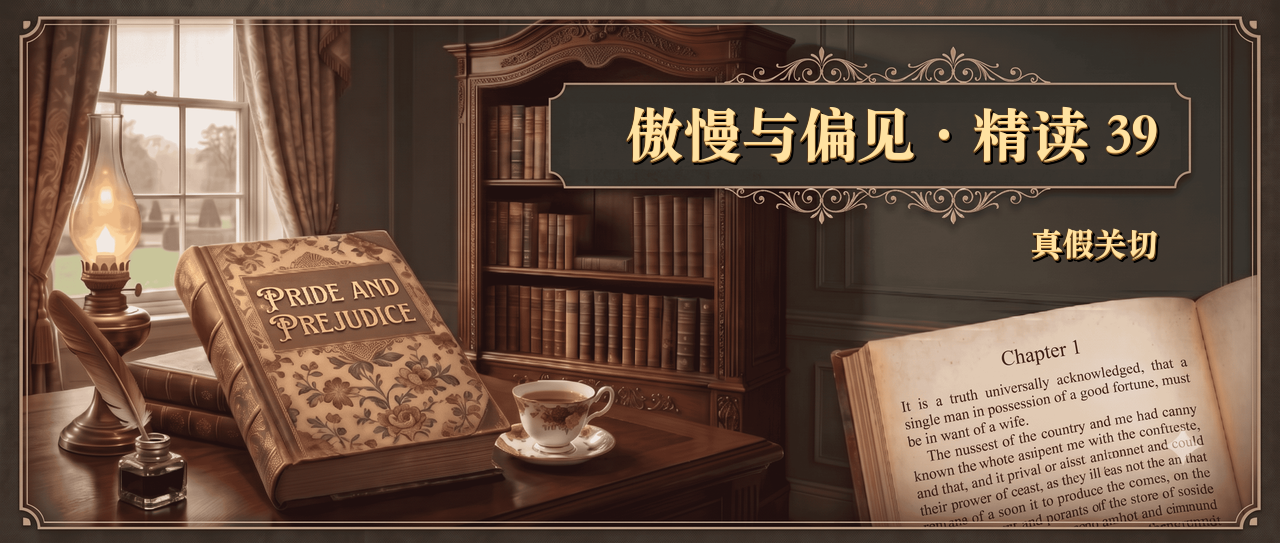
内瑟菲尔德的晚餐上,宾利姐妹三番五次说着难过,一转身不在简面前就把她忘了;只有宾利先生的焦急是真的。

内瑟菲尔德的晚餐上,宾利姐妹三番五次说着难过,一转身不在简面前就把她忘了;只有宾利先生的焦急是真的。
这一段来自《傲慢与偏见》第八章的开头。奥斯汀用一顿晚餐,把每个人的"关切"验了真假——她写好恶从不看当面的漂亮话,而看人在简"不在场"时露出的底色。
English Text: Dinner at Netherfield: True Concern and Polite Words
At five o’clock the two ladies retired to dress, and at half-past six Elizabeth was summoned to dinner. To the civil inquiries which then poured in, and amongst which she had the pleasure of distinguishing the much superior solicitude of Mr. Bingley, she could not make a very favourable answer. Jane was by no means better. The sisters, on hearing this, repeated three or four times how much they were grieved, how shocking it was to have a bad cold, and how excessively they disliked being ill themselves; and then thought no more of the matter: and their indifference towards Jane, when not immediately before them, restored Elizabeth to the enjoyment of all her original dislike.
Their brother, indeed, was the only one of the party whom she could regard with any complacency. His anxiety for Jane was evident, and his attentions to herself most pleasing; and they prevented her feeling herself so much an intruder as she believed she was considered by the others. She had very little notice from any but him. Miss Bingley was engrossed by Mr. Darcy, her sister scarcely less so; and as for Mr. Hurst, by whom Elizabeth sat, he was an indolent man, who lived only to eat, drink, and play at cards, who, when he found her prefer a plain dish to a ragout, had nothing to say to her.
中文翻译:内瑟菲尔德的晚餐:真心与客套
五点钟,两位女士回房更衣;六点半,伊丽莎白被请去用晚餐。面对纷至沓来的礼貌问候——其中她欣慰地分辨出宾利先生那格外深切的关怀——她却无法给出令人宽心的答复。简的病情丝毫不见好转。那两姐妹一听,便三番五次地重申她们有多难过,患上重感冒是多么糟糕,以及她们自己是多么讨厌生病,随后就把这事抛到脑后了。这种一旦不在简面前、便对她漠不关心的态度,让伊丽莎白原本对她们的厌恶又重新回来了。
说实话,她们的兄弟是这一行人里唯一让她看着顺眼的。他对简的焦急显而易见,对她本人的殷勤也让人如沐春风;这让她不至于觉得自己是个不受欢迎的闯入者——尽管她相信其他人正是这么看她的。除了他,几乎没人搭理她。宾利小姐一心扑在达西先生身上,她姐姐也差不了多少;至于坐在伊丽莎白旁边的赫斯特先生,他是个懒散的人,活着只为吃喝和打牌,一发现她宁愿吃清淡的菜也不爱法式炖肉,就再没话跟她说了。
阅读提示:把"关切"放到简不在场时来验
这一段没有冲突,只有一桌人吃饭;奥斯汀却用一个很刁的角度把众人分了类——不是看他们当面说什么,而是看他们在简"不在眼前"时还剩多少在意。宾利姐妹当着伊丽莎白的面,把"难过"重复了三四遍(repeated three or four times how much they were grieved),话说得越满,越显出这只是客套;奥斯汀紧跟一句 and then thought no more of the matter(随后就再没想过这事),冷冷地把她们的真心收了回去。
真正的判断落在 when not immediately before them(一旦不在她们眼前)这半句上:正是简"不在场"时的这份 indifference(冷漠),让伊丽莎白 restored to ... all her original dislike(重新拾回原先的厌恶)。奥斯汀写好恶,从不靠当面的漂亮话,而靠人在"不必表演"时露出的底色。与之对照,宾利先生的 anxiety(焦急)不用说给谁听,赫斯特先生则连一句应酬都懒得给——一顿饭下来,谁的关心是真的,一目了然。
重点词汇
solicitude /səˈlɪsɪtjuːd/ noun — 关怀,挂念(真切的在意)
原文例句:...she had the pleasure of distinguishing the much superior solicitude of Mr. Bingley.
这是全段的正面参照物。伊丽莎白能从一堆礼貌问候里"分辨"出宾利先生的 solicitude,说明它和旁人的客套不一样——不是说出来的,是能被听出来的真心。
indifference /ɪnˈdɪfrəns/ noun — 冷漠,漠不关心
原文例句:Their indifference towards Jane, when not immediately before them, restored Elizabeth to ... her original dislike.
它和 solicitude 正好是一对。宾利姐妹的 indifference 专挑简"不在场"时冒出来,奥斯汀用它给这家的姐妹定了性,也让伊丽莎白的厌恶失而复得。
indolent /ˈɪndələnt/ adj. — 懒散的,怠惰的
原文例句:...he was an indolent man, who lived only to eat, drink, and play at cards.
一个词就把赫斯特先生画活了:他不是无礼,是懒得费心——连"关切"都懒得假装。发现邻座不合胃口,索性一句话都不再说。
ragout /ræˈɡuː/ noun — 法式炖肉(浓味的肉菜杂烩)
原文例句:...when he found her prefer a plain dish to a ragout, had nothing to say to her.
这是个来自法语的餐桌词,与 plain dish(清淡的菜)成对。伊丽莎白偏爱清淡、不爱这种考究浓味,成了赫斯特先生对她彻底失去兴趣的全部理由——奥斯汀用一道菜,写尽他的贪嘴与浅薄。
长难句解析
1. To the civil inquiries which then poured in, and amongst which she had the pleasure of distinguishing the much superior solicitude of Mr. Bingley, she could not make a very favourable answer.
说明:这句把介词短语 To the civil inquiries... 整段提到句首,正常语序其实是"She could not make a very favourable answer to the civil inquiries..."。前置是为了先铺开"问候"这个场面,再落到伊丽莎白答不上什么好消息。中间套了两个定语从句修饰 inquiries:which then poured in(纷至沓来),以及 amongst which she had the pleasure of distinguishing...(她从中欣慰地分辨出宾利先生的关切)。
结构:前置介词短语 (To the civil inquiries [which... poured in] [amongst which... distinguishing...]) + 主语 (she) + 谓语 (could not make) + 宾语 (answer)
2. ...as for Mr. Hurst, by whom Elizabeth sat, he was an indolent man, who lived only to eat, drink, and play at cards, who, when he found her prefer a plain dish to a ragout, had nothing to say to her.
说明:主句很短——"he was an indolent man";后面挂了两个 who 引导的定语从句层层补充。第一个 who 说他"只为吃喝打牌而活";第二个 who 里又嵌了一个时间状语从句 when he found her prefer a plain dish to a ragout(当他发现她宁愿吃清淡菜也不要炖肉时)。注意 prefer A to B 意为"喜欢 A 胜过 B",to 不是"给"。
结构:as for Mr. Hurst [by whom Elizabeth sat] + 主句 (he was an indolent man) + 定语从句1 (who lived only to...) + 定语从句2 (who, [when 状语从句], had nothing to say)
今日测验
Q1. How did Mr. Bingley's sisters react to the news that Jane was not getting better?
A. They immediately went upstairs to nurse her.
B. They expressed verbal sympathy but quickly lost interest.
C. They blamed Elizabeth for Jane's illness.
D. They asked Mr. Bingley to call a doctor.
Q2. Why did Mr. Hurst have nothing to say to Elizabeth?
A. He was too shy to speak to strangers.
B. He was angry at her for interrupting dinner.
C. He lost interest because she preferred plain food over rich dishes.
D. He was engrossed in conversation with Mr. Darcy.
想看答案和解析?
这篇的自测编号是 GRJWT。
微信扫码关注公众号 【喜乐成长路】,回复:
GRJWT:查看本篇完整答案解析GRJWT 1:B:提交第 1 题答案(1=第 1 题,B=你的选项;示例不是答案)GRJWT 1:B 2:C或GRJWT BC:一次提交两题(按题号顺序;示例不是答案)

扫不了码的话,可以在微信里搜索 「喜乐成长路」,或搜索微信号 xilechengzhanglu。
我会继续把《傲慢与偏见》拆成一小段一小段来读:原文、翻译、词汇、长难句和自测都会发在公众号里。适合想读英文原著,但又不想被长句和生词劝退的读者。