精读《傲慢与偏见》42:她一句话推开"抬举"和"贬低"
伊丽莎白婉拒牌局、拿起书,宾利小姐立刻替她贴上"看不起打牌、只爱读书"的标签,她却一句话把这褒和贬一起推回去。

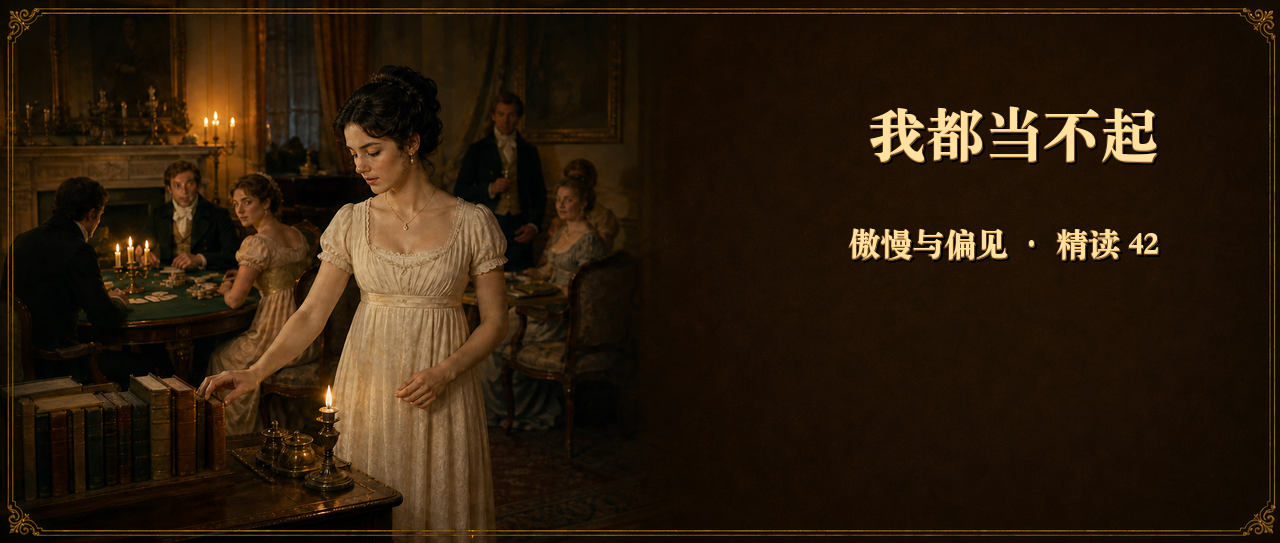
伊丽莎白婉拒牌局、拿起书,宾利小姐立刻替她贴上"看不起打牌、只爱读书"的标签,她却一句话把这褒和贬一起推回去。
这一段来自《傲慢与偏见》第八章。最有戏剧感的地方,是宾利小姐想给伊丽莎白钉上"看不起牌局、只爱读书"的清高标签,伊丽莎白却一句话把这抬举和贬低一起推开——既不认自己是了不起的读书人,也不接"看不起打牌"的贬低。
English Text: Neither Praise nor Censure
With a renewal of tenderness, however, they repaired to her room on leaving the dining-parlour, and sat with her till summoned to coffee. She was still very poorly, and Elizabeth would not quit her at all, till late in the evening, when she had the comfort of seeing her asleep, and when it appeared to her rather right than pleasant that she should go down stairs herself. On entering the drawing-room, she found the whole party at loo, and was immediately invited to join them; but suspecting them to be playing high, she declined it, and making her sister the excuse, said she would amuse herself, for the short time she could stay below, with a book. Mr. Hurst looked at her with astonishment.
“Do you prefer reading to cards?” said he; “that is rather singular.”
“Miss Eliza Bennet,” said Miss Bingley, “despises cards. She is a great reader, and has no pleasure in anything else.”
“I deserve neither such praise nor such censure,” cried Elizabeth; “I am not a great reader, and I have pleasure in many things.”
“In nursing your sister I am sure you have pleasure,” said Bingley; “and I hope it will soon be increased by seeing her quite well.”
Elizabeth thanked him from her heart, and then walked towards a table where a few books were lying. He immediately offered to fetch her others; all that his library afforded.
“And I wish my collection were larger for your benefit and my own credit; but I am an idle fellow; and though I have not many, I have more than I ever looked into.”
中文翻译:这褒贬我都当不起
然而,出于重新涌起的怜爱,大家离开餐厅后便去了简的房间,陪她坐到被叫去喝咖啡为止。她依然病得很重,伊丽莎白寸步不离,直到深夜见她安然睡去,这才觉得自己下楼露个面,虽说算不上乐意,却也是分内该做的事。
一走进客厅,她发现众人都在打"卢"牌,随即被邀入局;但她猜想他们赌注下得很大,便婉言推辞,借口要照看姐姐,说自己在楼下只能待一小会儿,想看本书消遣。赫斯特先生惊讶地望着她。
"你竟然喜欢读书甚于打牌?"他说,"这倒稀奇。"
"伊莱莎·贝内特小姐,"宾利小姐说,"是看不起打牌的。她是个了不起的读书人,除了读书,对什么都提不起兴致。"
"这样的褒和贬,我都当不起,"伊丽莎白高声分辩,"我算不上什么了不起的读书人,我对许多事情也都有兴致。"
"照看令姐,你心里一定觉得快乐,"宾利先生说,"我也盼着她早日康复,让你这份快乐更添几分。"
伊丽莎白由衷地谢过他,随即走向一张摆着几本书的桌子。他当即提议去替她另取几本,把藏书室里所有的书都拿来。
"为了方便你读,也为了我自己的面子,真希望我的藏书能再多些;可我是个懒散的人,书虽不多,却也比我翻看过的要多了。"
阅读提示:一句话同时推开"抬举"和"贬低"
这一段最有戏剧感的地方,是宾利小姐想给伊丽莎白钉上"看不起牌局、只爱读书"的清高标签,伊丽莎白却一句话把这抬举和贬低一起推开。
注意奥斯汀安排反应的顺序。同样是"不打牌、去看书"这个小动作,先是赫斯特先生一脸惊讶,只会用 singular(稀奇)来打量;接着宾利小姐抢过话头,替伊丽莎白定性——"看不起打牌""了不起的读书人""对别的都没兴致"。这几句看似夸奖,其实是把人往一个便于讥讽的模子里塞。
伊丽莎白的回答妙就妙在对称:neither such praise nor such censure。她不领"了不起的读书人"这顶高帽,也不认"看不起打牌"那句贬低,两样一起还回去。她不装清高,也不自贬,分寸拿得极稳。
紧接着宾利先生的反应又是另一种声音:他不去替谁定性,只顺着"照看姐姐"这件实事说话,还张罗着把藏书都借给她。同一场牌局,兄妹俩的教养高下,就在这几句对话里摆了出来。
重点词汇
singular /ˈsɪŋɡjələ(r)/ adjective — 稀奇的,异常的
原文例句:“Do you prefer reading to cards? that is rather singular.”
赫斯特先生想不通有人会舍牌局而就书,只能用 singular 来形容。这个词此处不是"单数",而是"少见、反常"。
censure /ˈsenʃə(r)/ noun — 责难,严厉的指责
原文例句:“I deserve neither such praise nor such censure.”
伊丽莎白把宾利小姐的话拆成 praise(褒)和 censure(贬)两面,用 censure 而非普通的 blame,点出这贬低带着社交场上的评头论足。
repair /rɪˈpeə(r)/ verb — (成群地)前往,去往(旧义)
原文例句:They repaired to her room on leaving the dining-parlour.
这里的 repair 不是"修理",而是古旧正式的"前往",语气比 went 更郑重。
afford /əˈfɔːd/ verb — 提供,给予(正式用法)
原文例句:He immediately offered to fetch her others; all that his library afforded.
afford 在这里不是"负担得起",而是"(某处)能提供",一个词写出宾利要把藏书倾囊而出的热心。
长难句解析
1. When it appeared to her rather right than pleasant that she should go down stairs herself.
说明:这是一个用 it 作形式主语的句子,真正的主语是后面的 that 从句。rather ... than ... 表示"与其说……不如说……",这里说下楼"与其说是乐意,不如说是分内该做",透出伊丽莎白的责任感多过兴致。
结构:It(形式主语)+ appeared(系动词)+ rather right than pleasant(表语)+ that she should go down stairs herself(真正的主语从句)
2. Suspecting them to be playing high, she declined it, and making her sister the excuse, said she would amuse herself with a book.
说明:句首 Suspecting ... 是现在分词短语作原因状语,playing high 指赌注下得很大。后半句又用 making her sister the excuse 这一分词结构,说明她拿姐姐当推辞的借口。
结构:Suspecting them to be playing high(分词状语)+ she(主语)+ declined(谓语)+ it(宾语)...
今日测验
Q1. Why did Elizabeth decline the invitation to play cards?
A. She does not know how to play loo.
B. She thinks reading is superior to playing cards.
C. She suspects the stakes (money involved) are too high.
D. She wants to go back to sleep immediately.
Q2. How does Mr. Bingley's reaction differ from Mr. Hurst's and Miss Bingley's?
A. He is indifferent while others are angry.
B. He is kind and supportive, while others are mocking or surprised.
C. He joins in the teasing of Elizabeth.
D. He insists she must play cards.
想看答案和解析?
这篇的自测编号是 ZN2CT。
微信扫码关注公众号 【喜乐成长路】,回复:
ZN2CT:查看本篇完整答案解析ZN2CT 1:B:提交第 1 题答案(1=第 1 题,B=你的选项;示例不是答案)ZN2CT 1:B 2:A或ZN2CT BA:一次提交两题(按题号顺序;示例不是答案)

扫不了码的话,可以在微信里搜索 「喜乐成长路」,或搜索微信号 xilechengzhanglu。
我会继续把《傲慢与偏见》拆成一小段一小段来读:原文、翻译、词汇、长难句和自测都会发在公众号里。适合想读英文原著,但又不想被长句和生词劝退的读者。