精读《傲慢与偏见》49:贝内特太太自以为完胜,其实全是误会
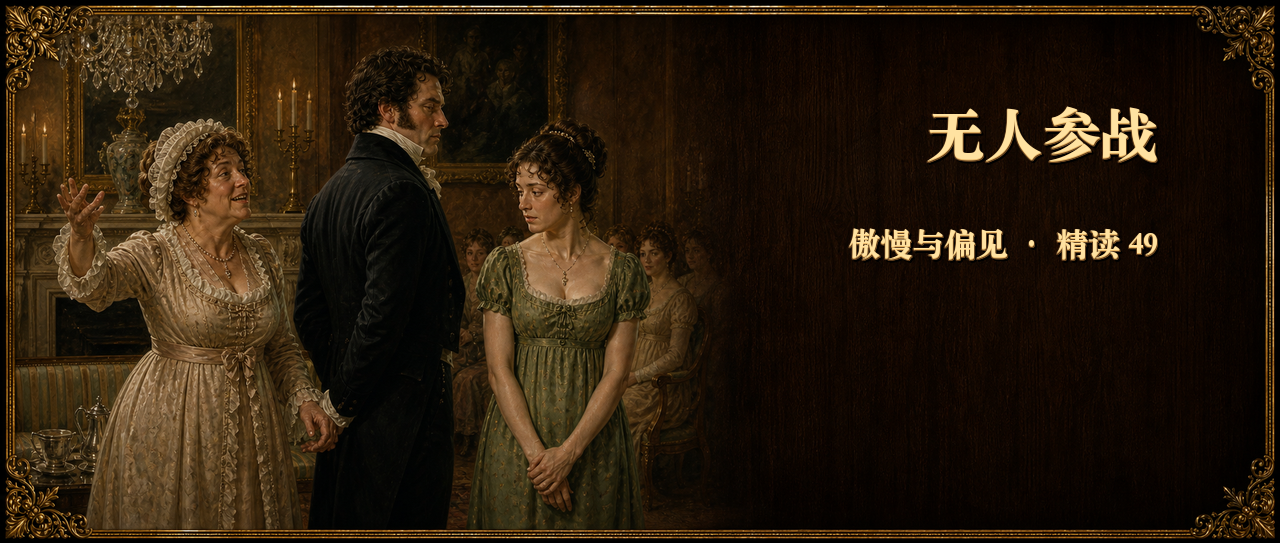
一场乡下与城里之争,藏着三种看人方式:达西嫌乡下单调,伊丽莎白说人一直在变,贝内特太太却把它听成侮辱,还自以为大获全胜。

一场乡下与城里之争,藏着三种看人方式:达西嫌乡下单调,伊丽莎白说人一直在变,贝内特太太却把它听成侮辱,还自以为大获全胜。
这一段来自《傲慢与偏见》第九章。同一句关于乡下的闲话,达西、伊丽莎白、贝内特太太各听出了完全不同的意思,而贝内特太太的"完胜",恰恰建立在她的误解之上。
English Text: Country versus Town, and a Complete Victory
“I did not know before,” continued Bingley, immediately, “that you were a studier of character. It must be an amusing study.”
“Yes; but intricate characters are the most amusing. They have at least that advantage.”
“The country,” said Darcy, “can in general supply but few subjects for such a study. In a country neighbourhood you move in a very confined and unvarying society.”
“But people themselves alter so much, that there is something new to be observed in them for ever.”
“Yes, indeed,” cried Mrs. Bennet, offended by his manner of mentioning a country neighbourhood. “I assure you there is quite as much of that going on in the country as in town.”
Everybody was surprised; and Darcy, after looking at her for a moment, turned silently away. Mrs. Bennet, who fancied she had gained a complete victory over him, continued her triumph,--
“I cannot see that London has any great advantage over the country, for my part, except the shops and public places. The country is a vast deal pleasanter, is not it, Mr. Bingley?”
“When I am in the country,” he replied, “I never wish to leave it; and when I am in town, it is pretty much the same. They have each their advantages, and I can be equally happy in either.”
“Ay, that is because you have the right disposition. But that gentleman,” looking at Darcy, “seemed to think the country was nothing at all.”
“Indeed, mamma, you are mistaken,” said Elizabeth, blushing for her mother. “You quite mistook Mr. Darcy. He only meant that there was not such a variety of people to be met with in the country as in town, which you must acknowledge to be true.”
“Certainly, my dear, nobody said there were; but as to not meeting with many people in this neighbourhood, I believe there are few neighbourhoods larger. I know we dine with four-and-twenty families.”
中文翻译:乡下与城里之争,与一场"完胜"
"我以前竟不知道,"宾利立刻接着说,"你原来是个研究性格的人。这一定是很有意思的研究。"
"是的;不过错综复杂的性格才最有意思。它们至少有这个好处。"
"乡下,"达西说,"大体上能供这种研究的对象寥寥无几。在乡下的邻里之间,你活动的圈子非常狭窄,又一成不变。"
"可是人本身变化那么大,你在他们身上永远能观察到新的东西。"
"是啊,一点不错,"贝内特太太嚷道——达西提到乡下邻里的那副口气让她觉得受了冒犯。"我敢跟你保证,这种事在乡下和在城里一样多。"
大家都吃了一惊;达西看了她一会儿,便一声不响地转过身去。贝内特太太自以为已经对他大获全胜,便继续得意地说下去——
"依我看,我看不出伦敦比乡下强在哪儿,除了那些商店和公共场所。乡下要惬意得多,不是吗,宾利先生?"
"我在乡下的时候,"他回答说,"就从不想离开;等我到了城里,感觉也差不多。两处各有各的好,我在哪儿都一样开心。"
"哎,那是因为你性子好。可是那位先生,"她瞧着达西说,"好像觉得乡下压根儿一文不值。"
"妈妈,您真是弄错了,"伊丽莎白说道,替母亲红了脸。"您完全误会了达西先生。他只是说,乡下不像城里那样能遇见形形色色的人——这一点您总得承认是真的。"
"当然啦,亲爱的,没人说这儿人多;可要说这一带遇不着几个人,我倒觉得没几个地方比咱们这儿更热闹。我知道咱们可是跟二十四户人家来往吃饭呢。"
阅读提示:同一句话,三个人听出三个意思
奥斯汀在这里没有让任何人跳出来评判贝内特太太,她只用了一句舞台调度:大家都吃了一惊,达西"看了她一会儿,便一声不响地转过身去"。达西的沉默不是认输,而是懒得回应;可紧接着一句"自以为已经大获全胜",把叙述者的反讽轻轻按了下去——读者看得见她错在哪里,她本人却毫不知情。
更值得留意的是,这段其实是三种"看人方式"的碰撞。达西说乡下的社交圈"confined and unvarying",看的是人物的数量与种类;伊丽莎白立刻反驳"people themselves alter so much",看的是同一个人身上不断变化的层次;而贝内特太太根本没在谈"研究性格",她把达西的话直接接成了对乡下、也对自己的贬低。
读这一段,可以盯住一个动作:伊丽莎白"blushing for her mother"。她脸红,不是因为达西说错了,而是因为她同时听懂了两边——既听懂达西那句话的原意,也听懂母亲把它误读成了侮辱。这一点"多听懂一层",正是奥斯汀反复放在伊丽莎白身上的东西。
重点词汇
intricate /ˈɪntrɪkət/ adj. — 错综复杂的;难以看透的
原文例句:Yes; but intricate characters are the most amusing.
这是伊丽莎白的关键词。她不满足于"研究性格"这件事本身,而是特意挑出"错综复杂"的性格才最有意思——这既是她的阅人趣味,也悄悄给后文她对达西的判断埋了伏笔。
confined /kənˈfaɪnd/ adj. — 狭窄的;受局限的
原文例句:In a country neighbourhood you move in a very confined and unvarying society.
达西用它形容乡下的社交圈:人少、又老是那几个。这个词本身并不带恶意,但配上他的口气,就成了贝内特太太听来的"侮辱",也是全场误会的引信。
disposition /ˌdɪspəˈzɪʃn/ n. — 性情;秉性
原文例句:Ay, that is because you have the right disposition.
贝内特太太夸宾利"性子好"用的就是这个词。它提醒我们:宾利那句"两处都一样开心"的圆融,与其说是见识,不如说是天生的好脾气——奥斯汀顺手又点了宾利一笔。
fancy /ˈfænsi/ v. — 自以为;想当然
原文例句:Mrs. Bennet, who fancied she had gained a complete victory over him, continued her triumph.
全段的反讽枢纽。fancy 不是"以为"那么中性,它带着"其实并非如此"的意味——一个词就点破:她的"完胜"只存在于她自己的想象里。
长难句解析
1. The country can in general supply but few subjects for such a study.
说明:这里的 but 不是"但是",而是副词,等于 only(仅仅、只)。所以整句是"乡下大体上只能提供很少的研究对象",语气比"but=但是"要冷淡、克制得多。
结构:主语(The country) + 情态动词(can) + 状语(in general) + 谓语(supply) + 副词(but=only) + 宾语(few subjects) + 后置定语(for such a study)
2. I cannot see that London has any great advantage over the country, for my part, except the shops and public places.
说明:for my part 是插入语,意思是"就我而言、依我看";advantage over 是固定搭配,表示"比……更占优势"。主句 I cannot see 后面接了一个 that 宾语从句。
结构:主语(I) + 谓语(cannot see) + 宾语从句(that London has any great advantage over the country) + 插入语(for my part) + 排除状语(except the shops and public places)
今日测验
Q1. Why does Elizabeth interrupt the conversation?
A. She agrees with her mother that the country is better.
B. She wants to argue with Mr. Bingley about his disposition.
C. She feels embarrassed by her mother's misunderstanding and tries to explain Darcy's meaning.
D. She wants to prove that they know twenty-four families.
Q2. How does Mr. Bingley respond when asked to compare the country and the town?
A. He says he prefers the town because of the shops.
B. He diplomatically states that he is happy in both places.
C. He agrees with Darcy that the country is confined.
D. He remains silent to avoid conflict.
想看答案和解析?
这篇的自测编号是 W6SCV。
微信扫码关注公众号 【喜乐成长路】,回复:
W6SCV:查看本篇完整答案解析W6SCV 1:B:提交第 1 题答案(1=第 1 题,B=你的选项;示例不是答案)W6SCV 1:B 2:A或W6SCV BA:一次提交两题(按题号顺序;示例不是答案)

扫不了码的话,可以在微信里搜索 「喜乐成长路」,或搜索微信号 xilechengzhanglu。
我会继续把《傲慢与偏见》拆成一小段一小段来读:原文、翻译、词汇、长难句和自测都会发在公众号里。适合想读英文原著,但又不想被长句和生词劝退的读者。